
Fujifilm X-T5 APS-C Photography Camera
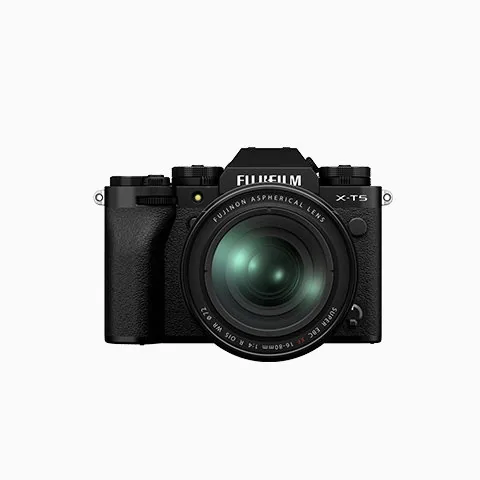
Fujifilm · X-T50
$1,699.00 MSRP
Key Features
- APS-C X-Trans CMOS 5 HR
- 5-Axis In-Body Stabilization
- Subject Detection
- Up to 20 fps Continuous Shooting
- Up to 240 fps Video
- Fujifilm X-Mount
🔒 Log in to add this to a kit.
In the Box
- 1 × NP-W235 Li-ion Battery
- 1 × Body Cap
- 1 × Hot Shoe Cover
- 1 × Shoulder Strap
- 1 × Sync Terminal Cover
- 1 × USB Cable
- 1 × USB-C Headphone Adapter
The Archive
Documents
- Fujifilm X-T5 — Owner's ManualManualWeb ↗
Fujifilm owner's manual / new-features guide for the X-T5 (fujifilm-dsc.com).
- Fujifilm X-T5 — FirmwareFirmware & UpdatesWeb ↗
Fujifilm US firmware download page for the X-T5.
- X-T5 — Spec SheetReference MaterialsWeb ↗
Fujifilm specifications page for the X-T5 mirrorless camera.
- X-T5 — Press ReleasePress ReleaseWeb ↗
Fujifilm US press release announcing the X-T5 mirrorless camera.
- X-T5 — OverviewManufacturer PagesWeb ↗
Fujifilm product overview page for the X-T5 mirrorless camera.
Firmware
Fixes minor bugs; earlier releases added FUJIFILM XApp pairing and Frame.io Camera to Cloud support (2.00-3.01), the REALA ACE film simulation and AF/movie-focus improvements (4.00), AF algorithm revisions (4.10), linear focus-ring response with the XF16-55mmF2.8 II (4.20), and enhanced wireless-communication security (4.30). No recording format was added at any point in the firmware history; F-Log2 and 6.2K/30p internal recording, and 4K/2:2:10-bit HDMI output, were present at the camera's original launch (firmware 1.00, November 2022).
Fujifilm
Fujifilm Photography & Hybrid Cameras
Fujifilm's photography and hybrid camera lineup is divided between two interchangeable-lens systems and a smaller fixed-lens range. The X series, built around APS-C sensors and the X mount, includes the rangefinder-styled X-Pro and X-E models, the SLR-styled X-T flagship line, the compact X-S series, the entry-level X-T100/X-T200 generation, and the high-performance X-H bodies aimed at hybrid stills-and-video work. Within this lineup, models like the X-T5 prioritize photography use cases, while the X-H2S and X-H2 target users with significant video workflows. The fixed-lens X100 series, currently represented by the X100VI, has become one of the company's most recognizable products.
The GFX system, anchored by the 44×33mm medium-format sensor, occupies a separate tier and includes the GFX 50S II, GFX 100S, and GFX 100 II, among others. Across both systems, Fujifilm's design philosophy emphasizes physical controls — dedicated dials for shutter speed, ISO, and exposure compensation — along with its proprietary film-simulation modes that approximate the look of historical Fujifilm film stocks. This combination has positioned the brand distinctively against the more menu-driven interfaces of competing systems.
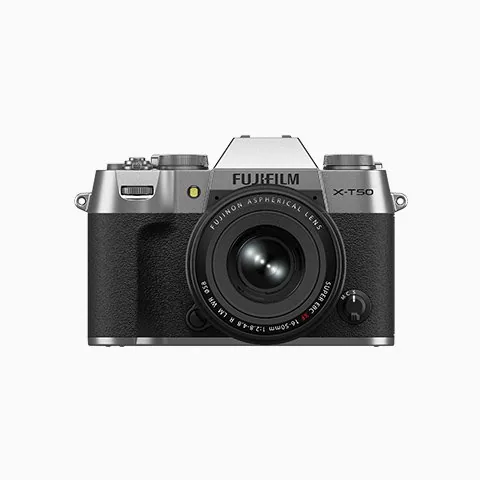
More in the X-T50 Series
Contact Fujifilm
- WebsiteContact Us
- WebsiteMain Site (X Series & GFX)
- WebsiteSupport
- PhoneRepairs (US): 800-659-3854
- PhoneTechnical Support (US): 800-800-3854
- E-MailDigital Camera Info (US): digitalinfo@fujifilm.com
- AddressFUJIFILM North America Corp (US HQ): 1100 King George Post Road, Edison, NJ 08837
- SocialFacebook
- SocialInstagram
- SocialX (Twitter)