
Leica SL3-S Full Frame Photography Camera
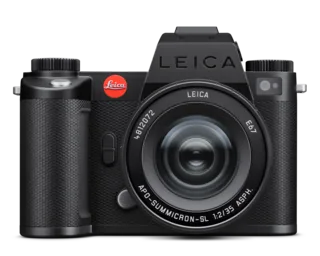
Leica · Leica SL
$5,665.00 MSRP
Key Features
- Full Frame CMOS
- 5-Axis In-Body Stabilization
- Subject Detection
- Up to 179.82 fps Video
- L-Mount
🔒 Log in to add this to a kit.
In the Box
- 1 × Battery BP-SCL6
- 1 × Carrying Strap
- 1 × Leica SL3-S Camera Body
- 1 × Quick Start Guide
- 1 × USB-C Cable
The Archive
Documents
- Leica SL3-S — Instruction ManualManualPDF
Leica official instruction manual (PDF) for the SL3-S.
- Leica SL3-S — Firmware & DownloadsFirmware & UpdatesWeb ↗
Leica downloads page for the SL3-S: firmware, manuals and software.
- SL3-S — Spec PageReference MaterialsWeb ↗
Leica technical specifications page for the SL3-S full-frame mirrorless camera.
- SL3-S — Product PageManufacturer PagesWeb ↗
Leica product page for the SL3-S full-frame mirrorless camera.
Firmware
False Color exposure assistant for video; HDMI mirroring of the camera monitor including its interface; a lens profile for the Noctilux-M 35 mm f/1.2 ASPH.; and vehicle subject detection in AF. The video format selector was reorganized around a filter system. No recording format was added.
- Leica SL3-S Firmware 4.0.0FreeDec 18, 2025
Faster hybrid autofocus with more precise people and animal detection, and a direct connection to Adobe Frame.io. Adds 4:3 open gate recording at 3328 x 2496.
Leica
Leica Photography & Hybrid Cameras
Leica's camera lineup is organized around three current platforms that span rangefinder, mirrorless, and fixed-lens compact categories. The M-system — anchored by the M11 and the monochrome-only M11 Monochrom — continues the company's rangefinder tradition with manual-focus M-mount lenses, optical viewfinder framing, and a sensor design philosophy that emphasizes a thin filter stack and high base-ISO image quality. The SL-system mirrorless bodies (SL2, SL2-S, SL3) use the L-mount alliance specification and target hybrid stills-and-video workflows with 8K and 5.8K video options, full-frame BSI CMOS sensors, and integrated image stabilization. The Q-series fixed-lens compacts — Q2 and Q3 — pair a full-frame sensor with a Summilux 28mm f/1.7 ASPH optic in a body sized for street and travel use.
Across the lineup, Leica maintains a manufacturing emphasis on tactile control surfaces, top-plate aperture and shutter dials where compatible, and full magnesium-alloy construction with weather sealing on the SL line and select M bodies. Firmware development continues across multiple-year product cycles, with major feature additions typically delivered through field-applicable updates rather than reserved for successor bodies. The result is a camera lineup positioned more for long-cycle ownership than rapid generational replacement, with optical and ergonomic continuity prioritized across product transitions.
More in the Leica SL Series
Contact Leica
- WebsiteDealer Locator
- WebsiteDownloads (Firmware/Manuals)
- WebsiteExtended Warranty
- WebsiteMain Site
- WebsiteRepair & Maintenance
- WebsiteService Contact
- PhoneHQ Wetzlar (Germany): +49 6441 2080-0
- PhoneSingapore (Asia Pacific HQ): +65 6336 9555
- PhoneUK Customer Care: +44 20 7629 1351
- PhoneUSA eCommerce: +1 800-480-5422
- PhoneUSA Parts / Tech Support / Repairs: +1 800-222-0118
- E-MailAsia Pacific Customer Care: customercare.lcap@leica-camera.com
- E-MailGeneral Info (HQ): info@leica-camera.com
- E-MailUK Customer Care: customercare.uk@leica-camera.com
- E-MailUSA Repair: repair@leicacamerausa.com
- AddressHQ Wetzlar (Germany): Am Leitz-Park 5, Wetzlar, Hesse 35578
- AddressLeica Camera Asia Pacific (Singapore): 36 Beach Road, 01-01, South Beach Quarter, Singapore, 189766
- AddressLeica Camera Inc. (USA): 500 Frank W. Burr Blvd., Suite 570, Teaneck, NJ 07666
- AddressLeica UK Customer Care: First Floor, 15 Greek Street, London, England W1D 4DP
- SocialFacebook
- SocialInstagram
- SocialLinkedIn
- SocialX/Twitter
- SocialYouTube