
Panasonic LUMIX S9 Full Frame Photography Camera
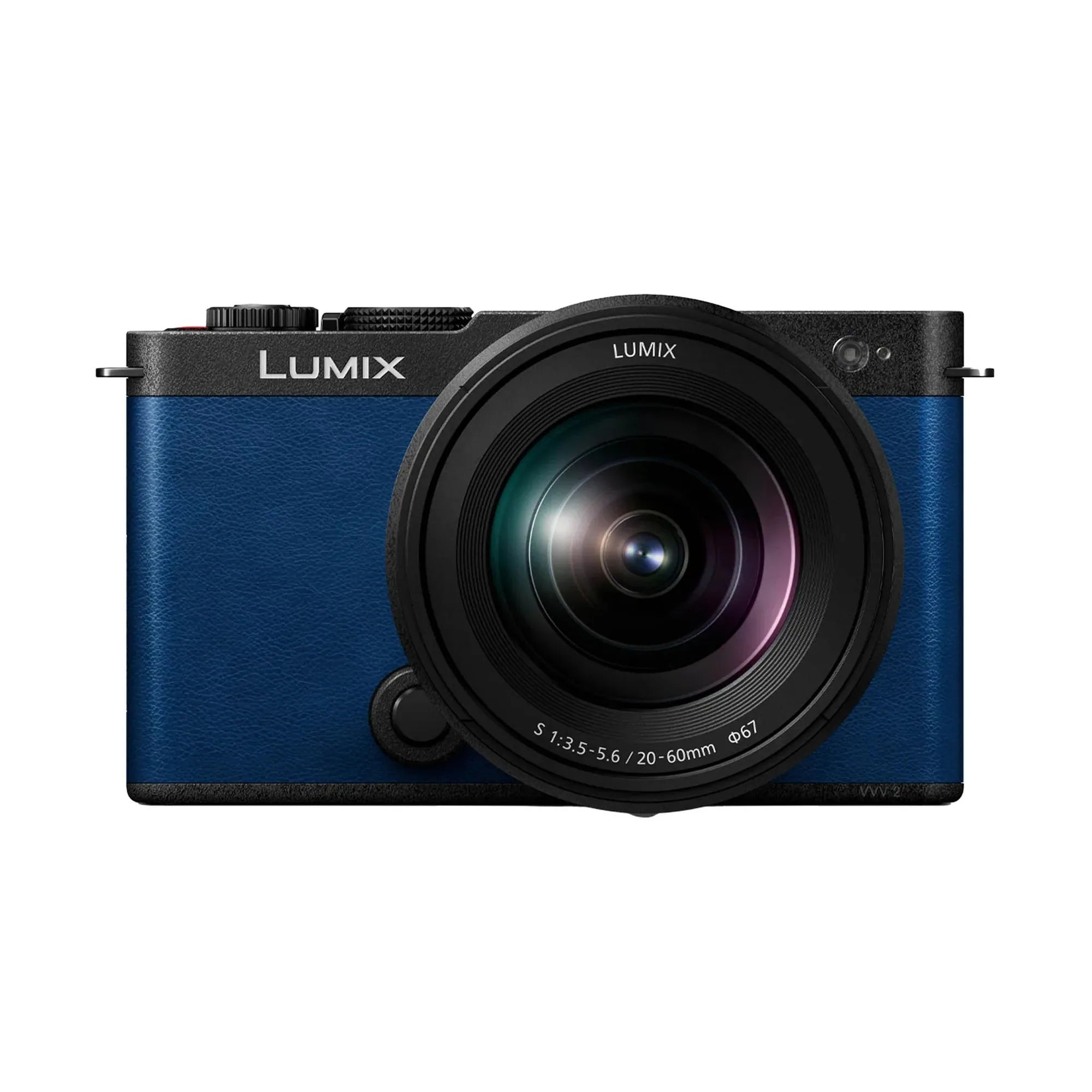
Panasonic · LUMIX S9
$1,497.00 MSRP
Key Features
- Full Frame CMOS
- 5-Axis In-Body Stabilization
- Subject Detection
- Up to 30 fps Continuous Shooting
- Up to 180 fps Video
- L-Mount
🔒 Log in to add this to a kit.
In the Box
- 1 × DMW-BLK22 Battery Pack
- 1 × Body Cap
- 1 × Shoulder Strap
- 1 × USB-C Cable
D.I.T. Data Imaging Technician
Resolution
Internal Recording
Aspect Ratio
Frame Rates
Project Frame Rates
Off-Speed Frame Rates
Sensor Modes
Sensor Modes
| Resolution | Recording Area (W × H) | Crop Factor |
|---|---|---|
| 3.8K 3:2 3840 x 2560 | 24.49 mm × 12.91 mm | 1.56x est. |
| 4.1K 17:9 4128 x 2176 | 24.49 mm × 12.91 mm | 1.56x est. |
Bit Depth & Color Sampling
10-Bit 4:2:0
10-bit 4:2:0 video captures 1,024 shades per color channel, but chroma is subsampled at a quarter of the luma resolution, meaning less color data is stored. This format offers better color depth than 8-bit 4:2:0 and is commonly used for consumer-grade recording and streaming, but it has limitations for intensive color grading and keying.
10-Bit 4:2:2
10-bit 4:2:2 video captures 1,024 shades per color channel, with chroma sampled at half the horizontal resolution of luma, which helps preserve more color detail than 4:2:0. This format strikes a balance between color accuracy and file size, making it ideal for professional broadcast, recording, and moderate color grading work where efficiency and quality are both important.
8-Bit 4:2:0
8-bit 4:2:0 video stores 256 shades per color channel and reduces color resolution by sampling color information (chroma) at one-quarter the rate of brightness (luma). This format is efficient for compression and streaming but offers limited flexibility for color correction and grading compared to higher bit-depth and chroma subsampling formats.
Codecs
AVC
AVC (Advanced Video Coding), also known as H.264, is a widely used video compression standard that balances high video quality with efficient file sizes, making it ideal for streaming, broadcasting, and video storage. It achieves compression by reducing redundancy within the video data, which helps maintain quality while keeping file sizes manageable for various platforms and devices.
HEVC
HEVC (High Efficiency Video Coding), also known as H.265, is a video compression standard that offers improved compression efficiency over its predecessor, AVC, by reducing file sizes while maintaining high video quality. It is widely used for 4K streaming, video conferencing, and storage, as it provides better compression for high-resolution videos without sacrificing detail.
Compression
Long-GOP
Long-GOP (Long Group of Pictures) is a video compression technique that reduces file size by storing only the changes between frames rather than every individual frame. It uses a combination of I-frames (intraframes with full image data), P-frames (predicted frames), and B-frames (bidirectional frames) to efficiently compress video over a sequence of frames. This structure allows for significantly smaller file sizes compared to All-Intra (All-I) compression, which encodes every frame independently. However, Long-GOP can be more processor-intensive to edit, since reconstructing any given frame may require decoding multiple surrounding frames.