
Sony BURANO Full-Frame 8K Digital Motion Picture Camera with E & PL Mount
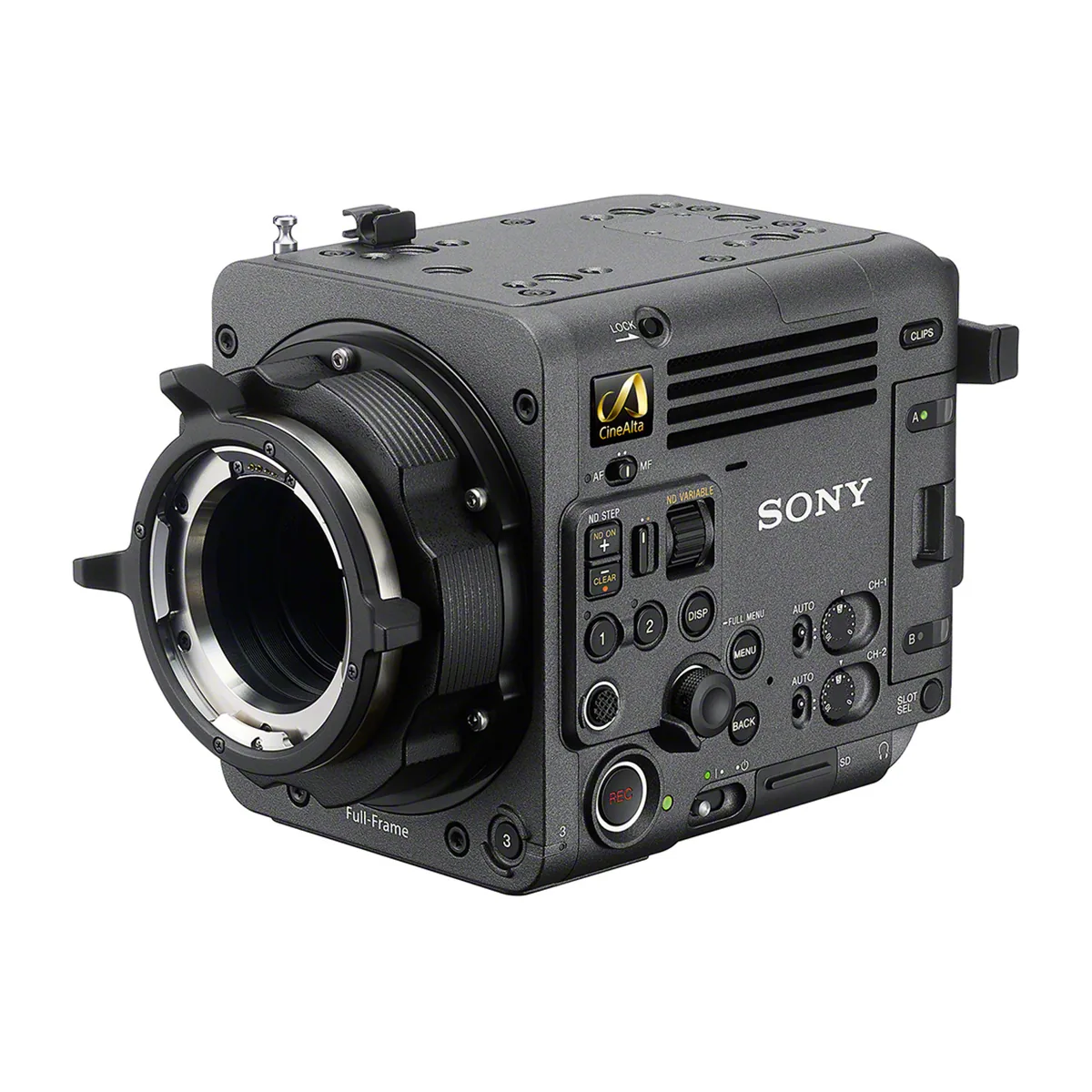
Sony · Sony CineAlta
$25,000.00 MSRP
Key Features
- Full Frame Exmor R CMOS
- S-LOG 3
- Up to 240 fps
- Internal X-OCN
- E-Mount and PL-Mount
🔒 Log in to add this to a kit.
In the Box
- 1 × 15 x 1/3 Arc Shim
- 1 × 4 x Handle Mounting Screw
- 1 × Circular Shim
- 1 × E-Mount Cap
- 1 × Handle with Viewfinder Arm
- 1 × LCD Monitor
- 1 × PL Mount
- 1 × PL-Mount Cap
- 1 × Sony BURANO 8K Digital Motion Picture Camera
- 1 × Viewfinder Loupe
- 1 × Viewfinder Mount Adapter
D.I.T. Data Imaging Technician
Resolution
Internal Recording
Aspect Ratio
Frame Rates
Project Frame Rates
Off-Speed Frame Rates
Sensor Modes
Sensor Modes
| Resolution | Recording Area (W × H) | Crop Factor |
|---|---|---|
| 8.6K 16:9 8632 x 4856 | 35.9 mm × 20.2 mm | 1.05x |
| UHD 8K 7680 x 4320 | 35.9 mm × 20.2 mm | 1.05x |
Bit Depth & Color Sampling
10-Bit 4:2:2
10-bit 4:2:2 video captures 1,024 shades per color channel, with chroma sampled at half the horizontal resolution of luma, which helps preserve more color detail than 4:2:0. This format strikes a balance between color accuracy and file size, making it ideal for professional broadcast, recording, and moderate color grading work where efficiency and quality are both important.
16-Bit RAW (Linear)
16-bit linear recording captures over 65,000 shades per color channel without gamma compression, maintaining a direct relationship between light input and digital output. This results in extremely high precision and dynamic range, ideal for visual effects, compositing, and workflows requiring the utmost image fidelity.
8-Bit 4:2:0
8-bit 4:2:0 video stores 256 shades per color channel and reduces color resolution by sampling color information (chroma) at one-quarter the rate of brightness (luma). This format is efficient for compression and streaming but offers limited flexibility for color correction and grading compared to higher bit-depth and chroma subsampling formats.
Codecs
X-OCN
X-OCN (eXtended Original Camera Negative) is Sony’s proprietary compressed RAW video format, designed to retain the full sensor data with high dynamic range and color precision while significantly reducing file sizes compared to uncompressed RAW. It provides the flexibility and grading latitude of RAW footage, making it ideal for high-end cinematic production, especially in workflows that involve extensive color correction, VFX, or HDR mastering. X-OCN uses efficient, visually lossless compression and comes in multiple variants—X-OCN LT, ST, and XT—offering different levels of quality and data rate to suit various production needs. This format enables filmmakers to achieve the highest image quality from Sony cinema cameras while maintaining manageable storage and processing demands, supporting seamless integration into professional post-production environments.
XAVC
XAVC-4K is an optimized version of XAVC designed specifically for 4K resolution recording. It offers high-quality video capture with high bitrates suitable for cinematic and professional workflows. XAVC-4K supports both Intra-frame and Long GOP compression methods, depending on the camera or specific production requirements. It is ideal for productions that require 4K quality, such as films, high-end broadcasts, and premium content creation. This codec ensures excellent image quality while providing the flexibility of working with large 4K files in post-production.
XAVC H
XAVC-H (High Efficiency) is a variant of Sony’s XAVC codec that uses the H.265/HEVC (High Efficiency Video Coding) compression standard to deliver high-quality video at significantly reduced file sizes compared to older codecs like H.264/AVC. It’s designed for efficient 4K and HDR (High Dynamic Range) video recording, making it ideal for professional workflows where storage and bandwidth are limited.
Compression
All-Intra
All-Intra (All-I) compression records each frame as a complete image, meaning every frame is independently encoded without relying on data from other frames. This results in higher quality and more predictable editing performance, making it ideal for post-production workflows that require precise frame-by-frame manipulation.
All-Intra VBR
All-Intra (All-I) compression records each frame as a complete image, meaning every frame is independently encoded without relying on data from other frames. This results in higher quality and more predictable editing performance, making it ideal for post-production workflows that require precise frame-by-frame manipulation.
Intra-Frame
All-Intra (All-I) compression records each frame as a complete image, meaning every frame is independently encoded without relying on data from other frames. This results in higher quality and more predictable editing performance, making it ideal for post-production workflows that require precise frame-by-frame manipulation.
Long-GOP
Long-GOP (Long Group of Pictures) is a video compression technique that reduces file size by storing only the changes between frames rather than every individual frame. It uses a combination of I-frames (intraframes with full image data), P-frames (predicted frames), and B-frames (bidirectional frames) to efficiently compress video over a sequence of frames. This structure allows for significantly smaller file sizes compared to All-Intra (All-I) compression, which encodes every frame independently. However, Long-GOP can be more processor-intensive to edit, since reconstructing any given frame may require decoding multiple surrounding frames.
X-OCN LT
X-OCN LT (Extended Original Camera Negative – Light) is the most compressed variant of Sony’s X-OCN RAW recording format, designed to retain the flexibility and dynamic range of RAW while minimizing file sizes for efficient long-form production. Offering 16-bit linear data and support for wide color gamuts (like S-Gamut3.Cine), X-OCN LT maintains excellent image fidelity for grading and VFX while reducing storage needs significantly compared to Sony’s RAW or X-OCN ST/HQ variants. It’s ideal for projects like documentaries, episodic TV, or digital cinema where RAW-quality post-production flexibility is needed without the burden of large data rates.