
Sony FX2 Full-Frame 4K Hybrid Cinema Camera
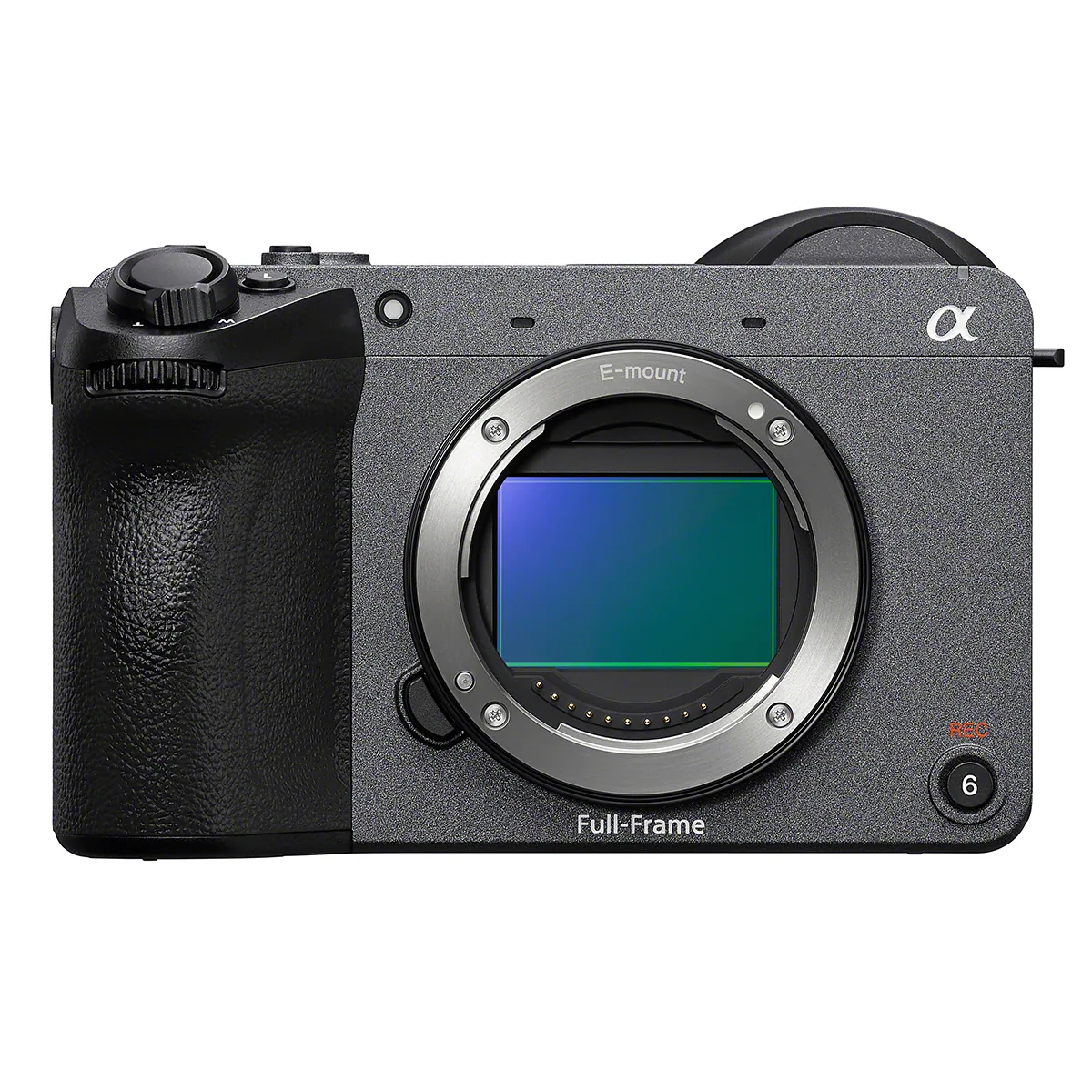
Sony · Sony FX Cinema Cameras
$3,098.00 MSRP
Key Features
- Full Frame Exmor R CMOS
- E-Mount
- S-LOG 3
- Up to 120 fps
🔒 Log in to add this to a kit.
In the Box
- 1 × Sony NP-FZ100 Battery (2280mAh)
- 1 × Body Cap
Colorist
Professional Color Profiles5
HLG / Rec.2020
Industry Standard10 stops10-bit recommendedHDRBroadcastQuick TurnaroundStreaming DeliveryHybrid Log-Gamma on the BT.2020 container, the pairing ITU-R BT.2100 defines for broadcast HDR. HLG is scene-referred and display-independent, so a single signal renders acceptably on both SDR and HDR displays without a separate SDR master — which is why it is the usual choice for live work where the viewer's display cannot be assumed. This is the standard HLG pairing; the BT.709-container variant exists because some cameras allow the narrower container with the same curve.
Curve: HLG2015
Hybrid Log-Gamma, developed jointly by the BBC and NHK and standardized in ITU-R BT.2100. It follows a conventional gamma curve through shadows and midtones and switches to logarithmic encoding only in the highlights, which is where the name comes from. That hybrid shape is what lets a single signal render acceptably on both SDR and HDR displays without a separate SDR master. It is scene-referred and display-independent, unlike PQ, which makes it the practical choice for live broadcast where the viewer's display cannot be assumed.
Gamut: Rec.2020Industry Standard · 2012
Defined in ITU-R BT.2020 in 2012 for ultra-high-definition television; BT.2100 later reused the same primaries for HDR. All three primaries sit on the spectral locus — they are monochromatic — which makes it the widest gamut definable without imaginary coordinates, covering 1.89 times the area of Rec.709. It is a delivery container rather than a capture space. No current display reproduces it in full, so HDR work is typically monitored on a P3 subset and delivered inside a 2020 container.
LUTs & References1
HLG / Rec.709
Industry Standard10 stops10-bit recommendedHDRBroadcastQuick TurnaroundThe ITU-R BT.2100 Hybrid Log-Gamma curve carried on a BT.709 color container rather than BT.2020. Sony offers exactly this pairing in Picture Profile, where selecting an HLG gamma leaves Color Mode a choice between BT.2020 and 709 — the 709 option records HDR gradation with HDTV color. It is the compatibility variant of the standard HLG pairing, trading container width for a delivery space already in use.
Curve: HLG2015
Hybrid Log-Gamma, developed jointly by the BBC and NHK and standardized in ITU-R BT.2100. It follows a conventional gamma curve through shadows and midtones and switches to logarithmic encoding only in the highlights, which is where the name comes from. That hybrid shape is what lets a single signal render acceptably on both SDR and HDR displays without a separate SDR master. It is scene-referred and display-independent, unlike PQ, which makes it the practical choice for live broadcast where the viewer's display cannot be assumed.
Gamut: Rec.709Industry Standard · 1990
Defined in ITU-R BT.709 in 1990 to give high-definition television a single colorimetric target as broadcasters moved off analogue standards. Its primaries were chosen to be reproducible on the CRT phosphors of the period, so all three sit inside the spectral locus and every color it defines is physically realisable. It is the smallest space in this base, and the reference every wider gamut here is measured against. In practice it is a delivery target rather than a capture space: grades finish in Rec.709 by default for broadcast, web and any non-HDR delivery.
LUTs & References1
Sony S-Cinetone / Rec.709
Sony S-Cinetone13 stopsSDRCinemaQuick TurnaroundDocumentaryHybrid Photo/VideoSony's baked-in cinematic SDR pairing, derived from VENICE color science and introduced on the FX9. It ships as the default picture profile across the FX line. Because the rendering is finished in camera and carried in the delivery container, there is no log curve to linearize and no gamut conversion to perform. It holds far less regrading latitude than the S-Log3 pairings, which is the trade it makes for needing no color session at all.
Curve: S-Cinetone2020
A baked-in SDR rendering rather than a log curve, derived from the color science of Sony's VENICE cinema camera and introduced on the FX9 in 2020. It ships as the default picture profile across the FX line, producing gentle midtone contrast and softly rolled highlights straight out of the camera. Because it is a finished rendering it holds far less regrading latitude than S-Log3 and is not meant to be linearized. It suits fast-turnaround SDR delivery, where the time a log pipeline costs would not be repaid.
Gamut: Rec.709Industry Standard · 1990
Defined in ITU-R BT.709 in 1990 to give high-definition television a single colorimetric target as broadcasters moved off analogue standards. Its primaries were chosen to be reproducible on the CRT phosphors of the period, so all three sit inside the spectral locus and every color it defines is physically realisable. It is the smallest space in this base, and the reference every wider gamut here is measured against. In practice it is a delivery target rather than a capture space: grades finish in Rec.709 by default for broadcast, web and any non-HDR delivery.
Sony S-LOG 3 / S-Gamut 3
Manufacturer Default14 stops10-bit recommendedHDRCinemaVFXStreaming DeliverySony's S-Log3 pairing for archival and ACES work, which Sony recommends for ACES recording as 10-bit MXF. S-Gamut3 shares S-Gamut's primaries exactly — Sony's technical summary prints the two as a single row — so this pairing widens the curve rather than the container relative to the S-Log2 generation. It differs from the S-Gamut3.Cine pairing in the shape of the container, not meaningfully in its size.
Curve: S-LOG 32014
Introduced in 2014 alongside S-Gamut3 and S-Gamut3.Cine, based on the Cineon digital-negative curve as revised in 2007. It has no highlight shoulder — the log section runs straight to the top — which is what separates it from S-Log2 and gives it about 1.5 stops more range. It places 18% gray at 0.4106, or 10-bit code 420, with 7.7 stops of headroom above it. Sony records it as full range in XAVC and MPEG, so material read as legal range will show wrong contrast before any grading begins.
Gamut: S-Gamut 3Proprietary · 2014
Introduced in 2014 alongside S-Log3. It shares S-Gamut's primaries exactly — Sony's own technical summary prints the two as a single row — so its area is identical at 2.49 times Rec.709. What changed between the generations was the transfer function, not the gamut. Sony recommends it for ACES and for archival recording, where the wide container is an advantage; for hand grading it carries the same caveat as S-Gamut.
LUTs & References7
Sony S-LOG 3 / S-Gamut 3.Cine
Manufacturer Default14 stops10-bit recommendedHDRCinemaTheatrical DeliveryVFXSony's grading-oriented S-Log3 pairing, released alongside the S-Gamut3 version. The two containers are within one per cent in area; what separates them is shape — S-Gamut3.Cine pulls its green primary well in toward realisable color, which makes it behave predictably under a grade where S-Gamut3's extreme green does not. Sony describes it as suited to DCI-P3 grading, which is where the pairing is most often used.
Curve: S-LOG 32014
Introduced in 2014 alongside S-Gamut3 and S-Gamut3.Cine, based on the Cineon digital-negative curve as revised in 2007. It has no highlight shoulder — the log section runs straight to the top — which is what separates it from S-Log2 and gives it about 1.5 stops more range. It places 18% gray at 0.4106, or 10-bit code 420, with 7.7 stops of headroom above it. Sony records it as full range in XAVC and MPEG, so material read as legal range will show wrong contrast before any grading begins.
Gamut: S-Gamut 3.CineProprietary · 2014
Released with S-Gamut3 as the grading-oriented member of the pair. The difference between them is shape rather than size: the two are within one per cent in area (2.46 against 2.49 times Rec.709), but S-Gamut3.Cine pulls its green primary in from 0.140, 0.855 to 0.225, 0.800, much closer to realisable color, while extending its red. Sony describes it as suited to DCI-P3 grading. That tamer green is what makes it predictable under a grade where S-Gamut3's extreme green is not.
LUTs & References7
Picture Profiles10
- Sony FilmCinematic
Creative Look FL. A moody finish that applies sharp contrast to calm coloring, with distinctive rendering of sky and greens.
- Sony NeutralCinematic
Lowers contrast and saturation for a softer, more natural-looking image with extra latitude for color grading. Useful when you want to keep more highlight and shadow detail than the Standard profile.
- Sony Black & WhiteMonochrome
Strips color for a classic monochrome image. A clean black-and-white starting point with no built-in toning.
- Sony StandardNatural
Sony's all-purpose default. Balanced color and contrast that work well across portraits, travel, and everyday shooting without committing to a stylized look.
- Sony PortraitPortrait
Tunes color and contrast to flatter skin tones. Slightly softer rendering than Standard, with a focus on smooth, natural-looking faces.
- Sony Soft HighkeyStylized
Creative Look SH. A bright, transparent, soft and vivid mood, lifting the image towards high key.
- Sony InstantVintage / Film
Creative Look IN. Matte textures produced by suppressing both contrast and saturation, recalling instant film.
- Sony SepiaVintage / Film
Applies a brownish tint to give images a vintage, sepia-toned appearance
- Sony VividVivid
Boosts saturation and contrast to make colors pop. Best for landscapes, travel, and any subject where you want bold, eye-catching color straight from the camera.
- Sony Vivid 2Vivid
Creative Look VV2. Bright, vivid color with rich clarity — a stronger rendering than VV(Vivid).