
Canon EOS R50 APS-C Photography Camera
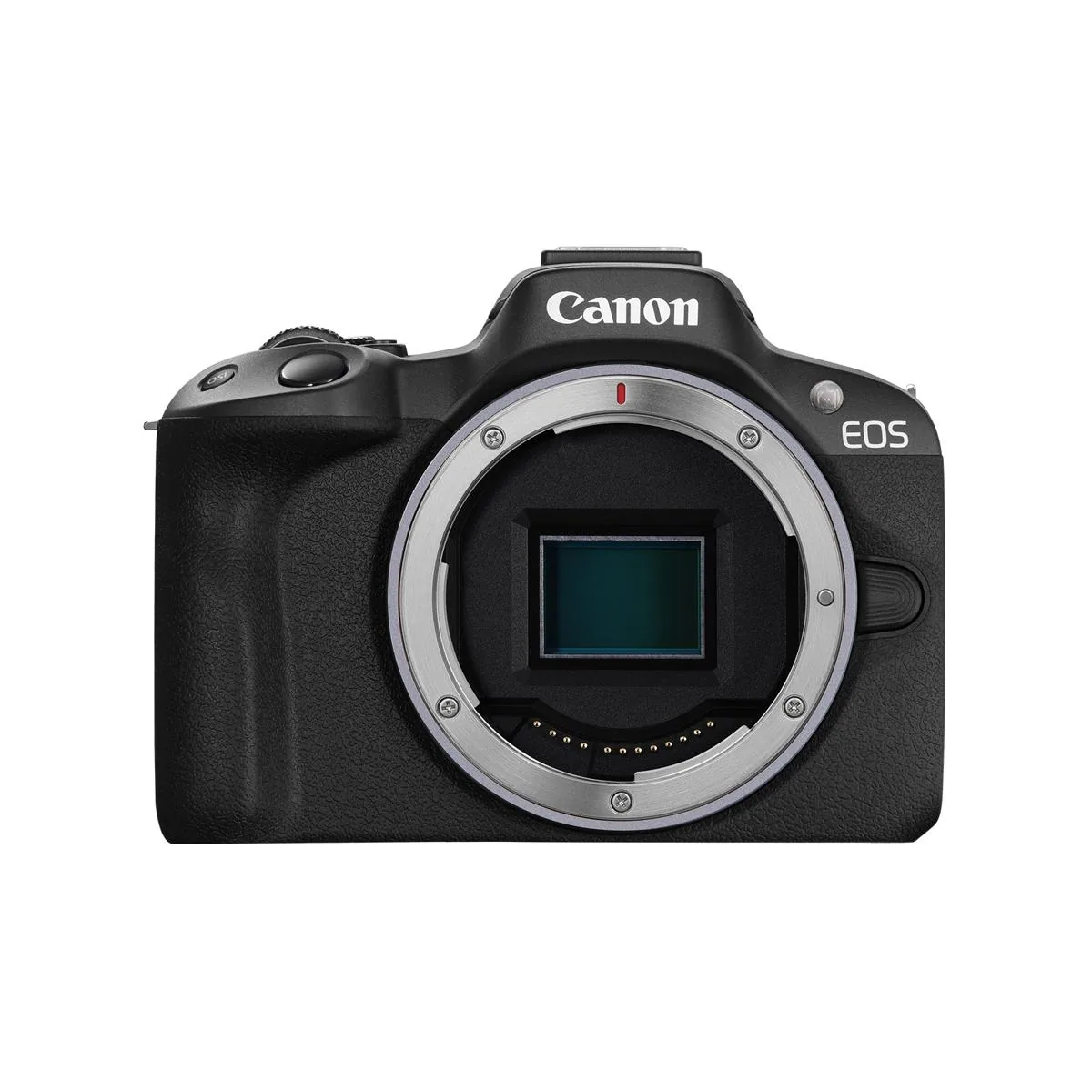
Canon · Canon EOS R50
$679.00 MSRP
Key Features
- APS-C CMOS
- Subject Detection
- Up to 15 fps Continuous Shooting
- RF-Mount
🔒 Log in to add this to a kit.
In the Box
- 1 × Battery Pack LP-E17
- 1 × Battery Charger LC-E17E
- 1 × Body Cap R-F-5
- 1 × Canon EOS R50 Camera Body
- 1 × Shoe Cover
- 1 × Strap
Colorist
Professional Color Profiles1
PQ / Rec.2020
Industry StandardHDRStreaming DeliveryBroadcastThe ITU-R BT.2100 perceptual-quantizer HDR curve on BT.2020. An industry standard rather than a manufacturer look; Canon exposes it as the PQ preset, and other makers offer the same curve. Unlike HLG it is display-referred and absolute — a code value specifies a luminance in nits rather than a relative exposure — so PQ material is graded against a mastering display of known peak luminance, and that metadata travels with the deliverable.
Curve: PQ
Perceptual Quantizer, standardized as SMPTE ST 2084 and carried into ITU-R BT.2100. Unlike every log curve in this table it is display-referred and absolute: a code value specifies a particular luminance in nits, up to 10,000, rather than a relative exposure. Its shape follows the contrast sensitivity of human vision, so code values are distributed where the eye can distinguish them. Because it is absolute, PQ material is graded against a mastering display of known peak luminance, and that mastering metadata travels with the deliverable.
Gamut: Rec.2020Industry Standard · 2012
Defined in ITU-R BT.2020 in 2012 for ultra-high-definition television; BT.2100 later reused the same primaries for HDR. All three primaries sit on the spectral locus — they are monochromatic — which makes it the widest gamut definable without imaginary coordinates, covering 1.89 times the area of Rec.709. It is a delivery container rather than a capture space. No current display reproduces it in full, so HDR work is typically monitored on a P3 subset and delivered inside a 2020 container.
Picture Profiles8
- Canon NeutralCinematic
Lower contrast and toned-down saturation produce a flatter, more natural-looking image. Designed to give the most flexibility for color grading and correction in post.
- Canon LandscapeLandscape
Emphasizes blues and greens with added sharpness for vivid, detailed outdoor scenes. Good for landscapes, nature, and any subject where vibrant color helps the image.
- Canon MonochromeMonochrome
Black-and-white rendering with optional in-camera filter effects (yellow, orange, red, green) and toning. A flexible starting point for classic and creative monochrome work.
- Canon AutoNatural
Analyzes the scene and adjusts color, contrast, and sharpness automatically. Skin tones render naturally and well-saturated subjects (skies, foliage) come out vivid — a smart default when you don't want to commit to a specific style.
- Canon FaithfulNatural
Renders subject color accurately as it would appear under D55 daylight (5200K). Best when faithful color reproduction matters — product, archival, fine-art repro — rather than a stylized look.
- Canon Fine DetailNatural
Prioritizes the rendering of subject contour and fine texture over color punch. Designed for highly detailed subjects — architecture, products, intricate patterns — where you want every line and texture to carry through.
- Canon StandardNatural
Canon's general-purpose default. Clear, lively color with stronger contrast and sharpening than the more neutral profiles — designed to look great straight out of camera with minimal editing.
- Canon PortraitPortrait
Smooths skin texture and warms color rendering slightly for flattering, gentle portraits. Reduced sharpening helps faces look more natural without softening the eyes.