
Canon EOS R8 Mark II Full Frame Photography Camera
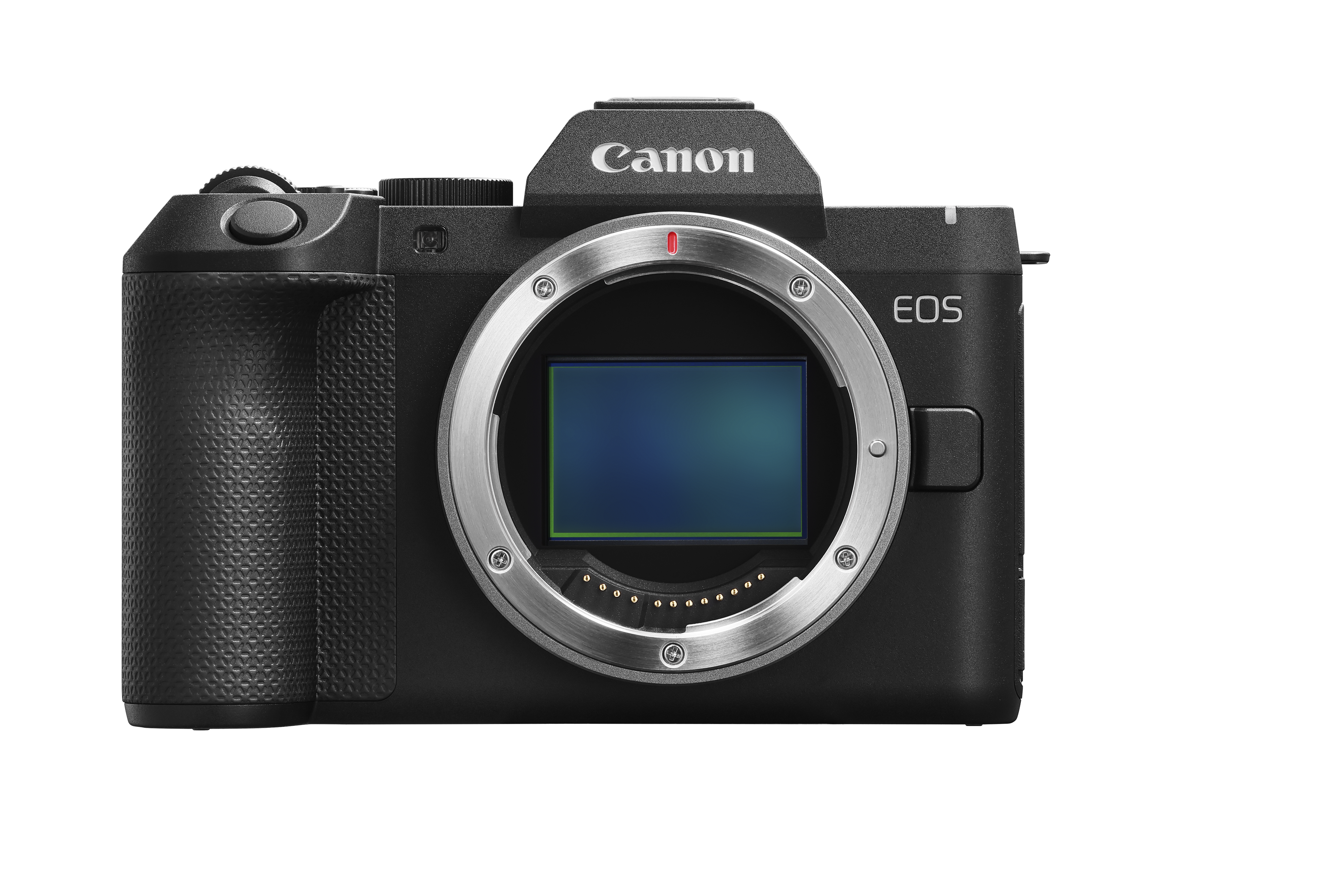
Canon · Canon EOS R8
$1,899.00 MSRP
Key Features
- Full Frame CMOS
- 5-Axis In-Body Stabilization
- Subject Detection
- Up to 40 fps Continuous Shooting
- Up to 179.82 fps Video
- RF-Mount
🔒 Log in to add this to a kit.
In the Box
- 1 × Battery Pack LP-E17
- 1 × Body Cap R-F-5 (Camera Cover R-F-5)
- 1 × Canon EOS R8 Mark II Camera Body
- 1 × Shoe Cover ER-SC2
- 1 × Strap (ER-100G per Canon Japan)
D.I.T. Data Imaging Technician
Resolution
Internal Recording
Aspect Ratio
Frame Rates
Project Frame Rates
Off-Speed Frame Rates
Sensor Modes
Sensor Modes
The same at every frame rate in this sensor mode.
| Resolution | Recording Area (W × H) | Crop Factor |
|---|---|---|
| UHD 4K 16:9 3840 x 2160 | 22.46 mm × 12.63 mm | 1.68x |
| Full HD 16:9 1920 x 1080 | 22.46 mm × 12.63 mm | 1.68x |
Bit Depth & Color Sampling
10-Bit 4:2:0
10-bit 4:2:0 video captures 1,024 shades per color channel, but chroma is subsampled at a quarter of the luma resolution, meaning less color data is stored. This format offers better color depth than 8-bit 4:2:0 and is commonly used for consumer-grade recording and streaming, but it has limitations for intensive color grading and keying.
10-Bit 4:2:2
10-bit 4:2:2 video captures 1,024 shades per color channel, with chroma sampled at half the horizontal resolution of luma, which helps preserve more color detail than 4:2:0. This format strikes a balance between color accuracy and file size, making it ideal for professional broadcast, recording, and moderate color grading work where efficiency and quality are both important.
8-Bit 4:2:0
8-bit 4:2:0 video stores 256 shades per color channel and reduces color resolution by sampling color information (chroma) at one-quarter the rate of brightness (luma). This format is efficient for compression and streaming but offers limited flexibility for color correction and grading compared to higher bit-depth and chroma subsampling formats.
Codecs
XF-AVC S
XF-AVC S is a variation of Canon’s XF-AVC codec tailored for long GOP recording with improved compression efficiency, designed to deliver high-quality video at lower bitrates. Like XF-AVC, it is based on the H.264/AVC compression standard but is optimized for more compact file sizes, making it suitable for extended recording times without significantly compromising image quality. XF-AVC S is often used in MP4 wrappers, making it more accessible for consumer and prosumer workflows while still offering compatibility with Canon’s professional imaging pipeline. It strikes a balance between quality, efficiency, and file manageability, making it a practical choice for documentary, event, and online video production where storage and editing speed are important considerations.
XF-HEVC S
Canon's XF-HEVC S codec is a high-efficiency video compression format for 4K recording, built on the H.265/HEVC standard and optimized for professional video production. It offers excellent image quality at lower bitrates than older codecs, such as XF-AVC, making it ideal for long-form recording and efficient storage without sacrificing much detail. This codec is used in Canon’s professional cinema and camcorder lines, allowing for smooth post-production workflows. The "S" designation means it uses the MP4 wrapper, which is more accessible and easier to process than MXF files.
Compression
Long-GOP
Long-GOP (Long Group of Pictures) is a video compression technique that reduces file size by storing only the changes between frames rather than every individual frame. It uses a combination of I-frames (intraframes with full image data), P-frames (predicted frames), and B-frames (bidirectional frames) to efficiently compress video over a sequence of frames. This structure allows for significantly smaller file sizes compared to All-Intra (All-I) compression, which encodes every frame independently. However, Long-GOP can be more processor-intensive to edit, since reconstructing any given frame may require decoding multiple surrounding frames.