
Nikon Z7 II Full Frame Photography Camera
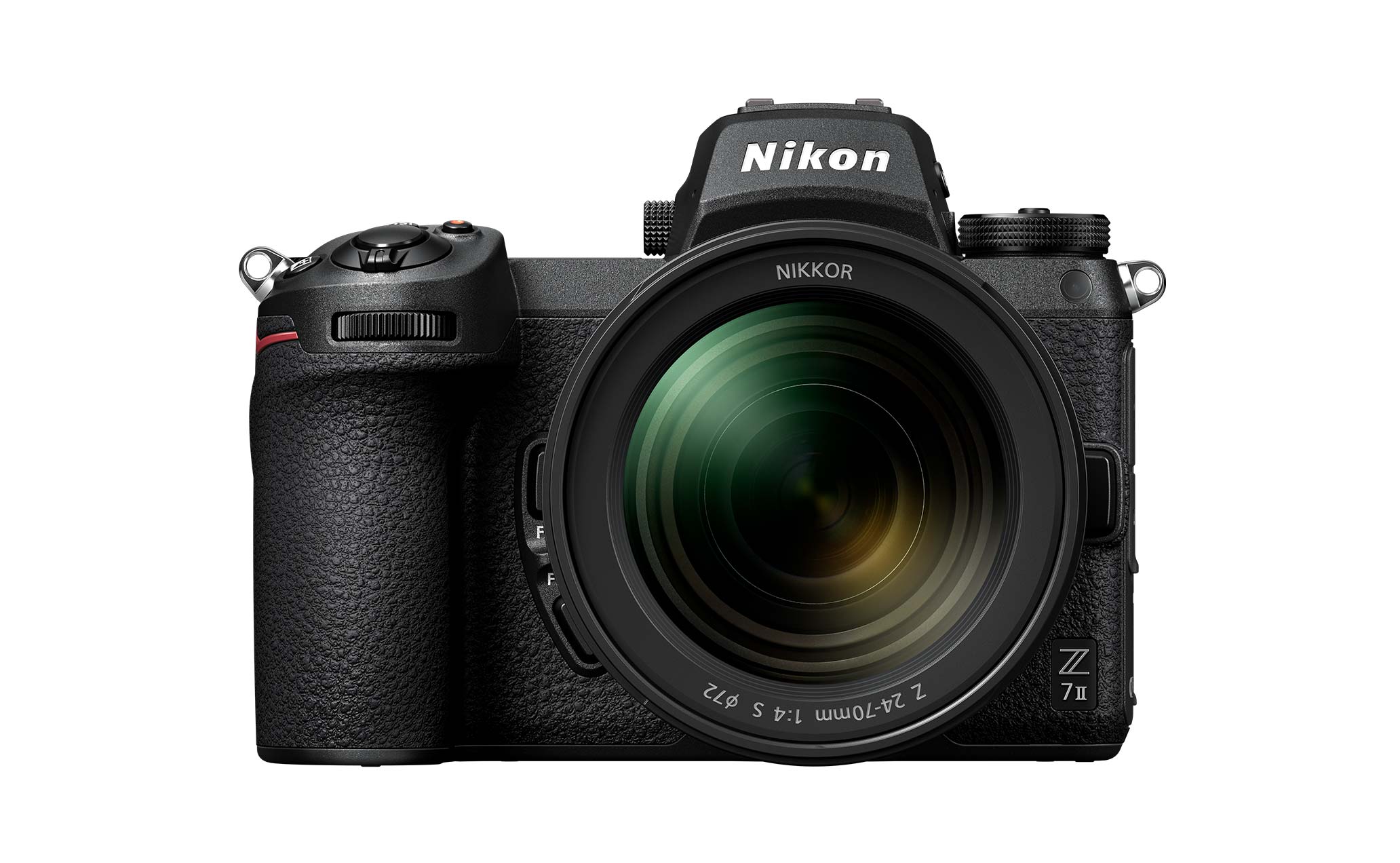
Nikon · Z7
$2,996.00 MSRP
Key Features
- Full Frame BSI CMOS
- 5-Axis In-Body Stabilization
- Subject Detection
- Up to 10 fps Continuous Shooting
- Up to 119.88 fps Video
- Z-Mount
🔒 Log in to add this to a kit.
In the Box
- 1 × EN-EL15c Rechargeable Li-ion Battery
- 1 × AN-DC19 Strap
- 1 × BF-N1 Body Cap
- 1 × BS-1 Accessory Shoe Cover
- 1 × DK-29 Rubber Eyecup
- 1 × EH-7P Charging AC Adapter
- 1 × HDMI/USB Cable Clip
- 1 × MH-25a Battery Charger
- 1 × UC-E24 USB Cable
The Archive
Documents
- Z 7 II — Online ManualManualWeb ↗
Nikon online user manual for the Z7 II full-frame mirrorless camera.
- Nikon Z 7 II — Firmware & DownloadsFirmware & UpdatesWeb ↗
Nikon Download Center page for the Nikon Z 7 II: current firmware, manuals and software.
- Z 7 II — Tech Specs (Nikon USA)Reference MaterialsWeb ↗
Nikon USA technical specifications page for the Z7 II full-frame mirrorless camera.
- Z 7 II — Press ReleasePress ReleaseWeb ↗
Nikon USA press release announcing the Z7 II and Z6 II full-frame mirrorless cameras.
- Z 7 II — Nikon AsiaManufacturer PagesWeb ↗
Nikon Asia product page for the Z7 II full-frame mirrorless camera.
Firmware
Adds support for the power-zoom feature on power-zoom lenses and fixes touch-AF interference with the frame-advance rate and a focus-point display problem in the Prioritize viewfinder (2) monitor mode. Firmware 1.10 (2021-02-25) extended Nikon's paid RAW video output upgrade to Blackmagic Design recorders, adding Blackmagic RAW output to the existing Apple ProRes RAW output; the camera's 4K UHD 60p/50p recording was part of its launch specification. No recording format was added in this release.
Adds support for Blackmagic Design external recorders (Video Assist 5" and 7" 12G HDR) under Nikon's paid RAW video output upgrade, so RAW video can be recorded as Blackmagic RAW; improves eye-detection AF. RAW output is not available at 4K UHD 60p/50p.
Nikon's fee-based RAW Video Output upgrade (US$199.95 plus shipping, performed by a Nikon service center) enables 12-bit RAW video output over HDMI: Apple ProRes RAW to the Atomos Ninja V and, from camera firmware 1.10, Blackmagic RAW to the Blackmagic Video Assist 12G HDR. RAW output is not available at 4K UHD 60p/50p. Every RAW output mode of this camera requires it.
Nikon
 Nikon Photography & Hybrid Cameras
Nikon’s legacy in photography spans more than a century, marked by a consistent dedication to optical precision and mechanical reliability. The company’s F-mount SLR system, introduced in the late 1950s, became a long-standing standard for professional photographers, defining much of the modern camera interface and control layout still seen today. As digital imaging evolved, Nikon maintained a focus on image quality, dynamic range, and ergonomics—attributes that have made its cameras a staple in fields ranging from photojournalism to wildlife and studio photography.
In recent years, Nikon has transitioned from its DSLR heritage to mirrorless platforms through the Z-mount system, designed around a wider diameter and shorter flange distance to accommodate new optical designs. This move has allowed Nikon to introduce faster, sharper lenses while retaining backward compatibility with decades of F-mount glass via adapters. Its mirrorless lineup emphasizes color fidelity, high-resolution sensors, and reliable autofocus systems, ensuring that Nikon’s visual character remains consistent across generations of cameras.
Nikon’s approach to photography continues to center on dependability and clarity of design. The company places equal importance on the tactile experience of shooting and the technical performance behind each image, offering tools that support both creative exploration and professional precision. By balancing tradition with innovation, Nikon has maintained its position as one of the key contributors to the evolution of modern photographic imaging.
Contact Nikon
- WebsiteContact Us
- WebsiteGlobal Site
- WebsiteMain Site
- WebsiteNikon Professional Services
- PhoneCustomer Support: +1-800-645-6687
- AddressNikon Inc. HQ: 1300 Walt Whitman Road, Melville, NY 11747
- SocialFacebook
- SocialInstagram
- SocialLinkedIn
- SocialX (Twitter)
- SocialYouTube