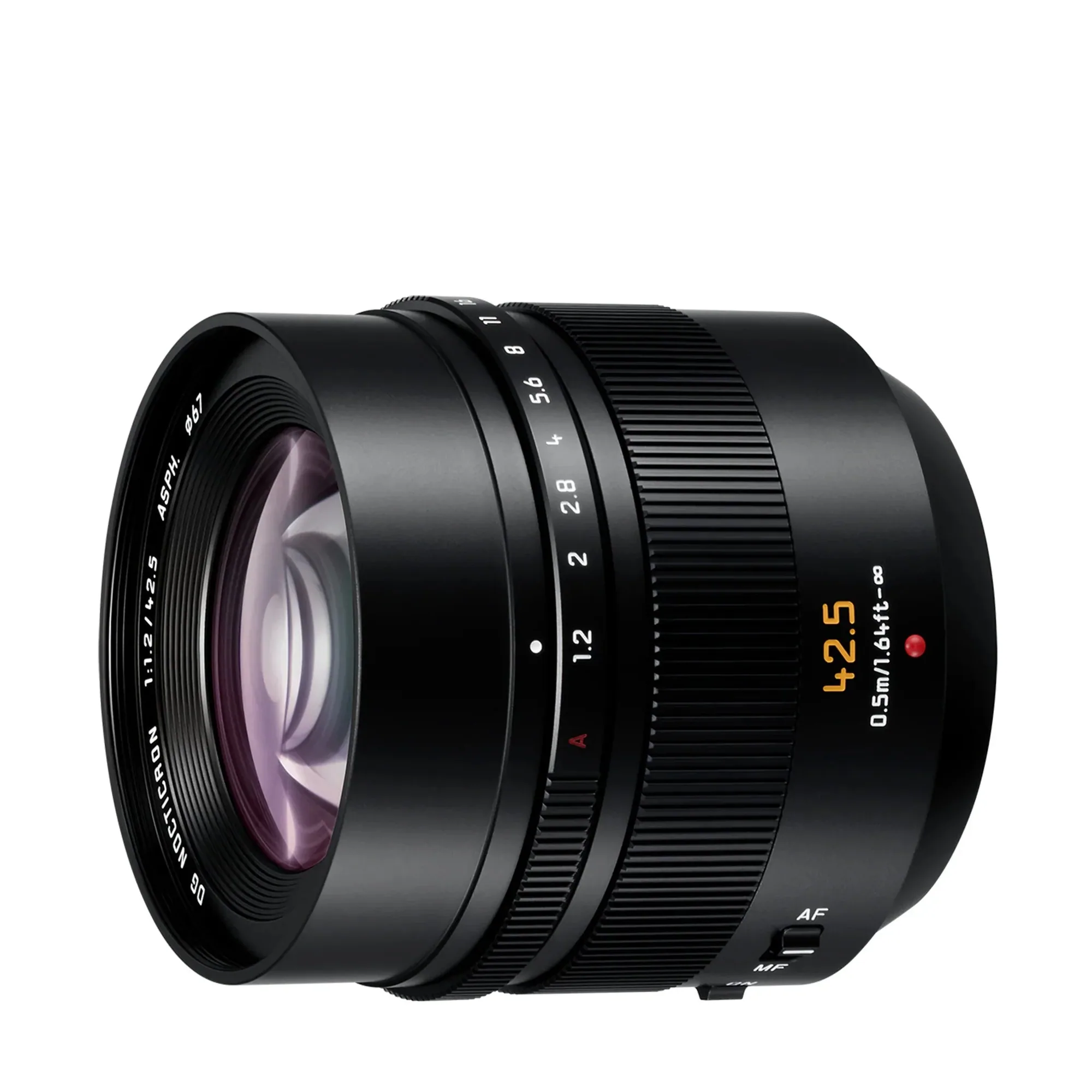
The Panasonic Leica DG Nocticron 42.5mm ƒ/1.2 ASPH. POWER O.I.S. Photography Lens with MFT-Mount is a telephoto prime covering Micro Four Thirds sensors. Telephoto focal lengths flatten perspective and lift a subject clear of its background, which portrait and sports photographers rely on. A ƒ/1.2 maximum aperture is among the fastest made, giving very shallow depth of field and usable shutter speeds after dark, closing to ƒ/16. Optical stabilization steadies the frame, widening the range of shutter speeds that can be used handheld. Autofocus lets the camera's own subject detection drive the lens, which is what makes it usable for tracking moving subjects and for video. It mounts via MFT-Mount. Closest focus is 1.6 ft, for a maximum magnification of 1:10.
Key Features
De-clickable Aperture Ring
The aperture ring can be switched between clicked and clickless. Clicked stops give repeatable exposure by feel for stills; clickless allows a silent, stepless iris pull during video, which is why the switch matters to anyone shooting both.
Telephoto Micro Four Thirds Coverage
The lens covers Micro Four Thirds sensors. A telephoto field of view compresses distance and separates a subject from its background, the range portrait and sports photographers work in.
ƒ/1.2 Maximum Aperture
ƒ/1.2 is among the fastest available, giving very shallow depth of field for portrait work and workable shutter speeds in low light, and the lens closes to ƒ/16.
Autofocus
The lens focuses under the camera's control, so hybrid shooters can use the body's own subject detection and tracking rather than pulling focus by hand — the difference between catching a moving subject and losing it.
Optical Image Stabilization
Optical stabilization compensates for hand movement, extending the range of shutter speeds usable handheld and steadying the frame for handheld video.
1:10 Maximum Magnification
A maximum magnification of 1:10 sets how large a small subject renders on the sensor, with a closest focus of 1.6 ft.
67mm Filter Thread