
Panasonic Lumix G Fisheye 8mm ƒ/3.5 Photography Lens with MFT-Mount
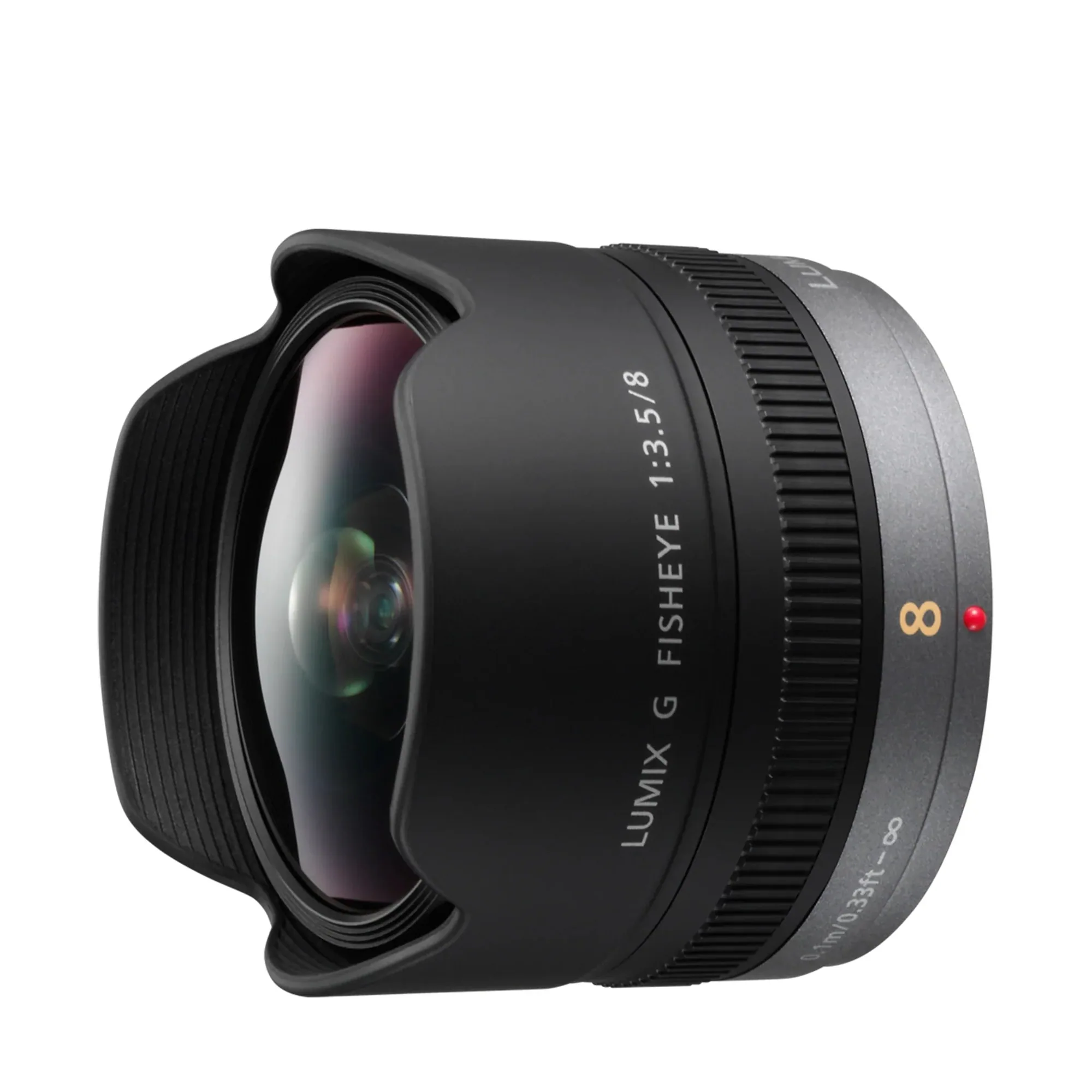
Panasonic · Lumix G
$797.99 MSRP
Key Features
- Ultra-Wide Micro Four Thirds Coverage
- ƒ/3.5 Maximum Aperture
- Autofocus
- 1:5 Maximum Magnification
- 22mm Filter Thread
🔒 Log in to add this to a kit.
In the Box
- 1 × Case
Overview
The Panasonic Lumix G Fisheye 8mm ƒ/3.5 Photography Lens with MFT-Mount is an ultra-wide prime covering Micro Four Thirds sensors. Ultra-wide coverage takes in a whole room or a whole horizon from close in, which is why architectural and landscape photographers reach for it. A ƒ/3.5 maximum aperture suits well-lit work and subjects that want more depth of field, closing to ƒ/22. Autofocus lets the camera's own subject detection drive the lens, which is what makes it usable for tracking moving subjects and for video. It mounts via MFT-Mount. Closest focus is 3.9 in, for a maximum magnification of 1:5.
Features
Key Features
Ultra-Wide Micro Four Thirds Coverage
The lens covers Micro Four Thirds sensors. An ultra-wide field of view holds an entire landscape or interior in one frame, and is the range architectural and astro work depend on.
ƒ/3.5 Maximum Aperture
ƒ/3.5 is a moderate maximum aperture, suited to well-lit conditions and to work that wants deeper depth of field, such as landscape and product photography. It closes to ƒ/22.
Autofocus
The lens focuses under the camera's control, so hybrid shooters can use the body's own subject detection and tracking rather than pulling focus by hand — the difference between catching a moving subject and losing it.
1:5 Maximum Magnification
A maximum magnification of 1:5 sets how large a small subject renders on the sensor, with a closest focus of 3.9 in.
22mm Filter Thread
Optical Design
7-Blade Diaphragm
7 blades hold the iris closer to a circle when stopped down, which keeps out-of-focus highlights round rather than polygonal — visible in portrait backgrounds and night work.
Mount & Build
MFT-Mount
The lens mounts via MFT-Mount, which sets the bodies it fits directly and those it reaches through an adapter.
Electronic Lens Communication
Contacts in the mount pass aperture, focus and focal length between lens and body, so exposure data is recorded to EXIF and in-camera corrections for distortion and vignetting apply automatically.