
Sigma 15mm ƒ/1.4 DG DN Diagonal Fisheye Art Photography Lens with L-Mount
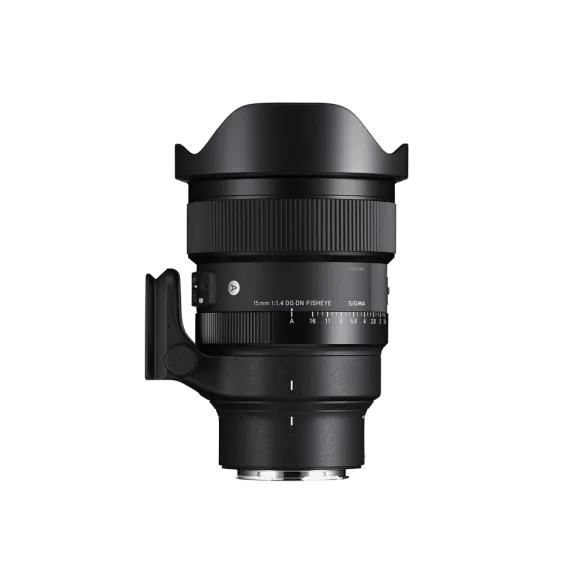
Sigma · Art Series DG DN
$1,999.00 MSRP
Key Features
- Ultra-Wide Full Frame Coverage
- ƒ/1.4 Maximum Aperture
- Autofocus
- 1:16 Maximum Magnification
- De-clickable Aperture Ring
- Rear Filters Only
🔒 Log in to add this to a kit.
In the Box
- 1 × Case
- 1 × Cover Lens Cap LC1040-01
- 1 × Guide Plate GP-21
- 1 × Protective Cover PT-51
- 1 × Rear Cap LCR II
- 1 × Shoulder Strap
- 1 × Tripod Socket TS-141
Overview
The Sigma 15mm ƒ/1.4 DG DN Diagonal Fisheye Art Photography Lens with L-Mount is an ultra-wide prime covering Full Frame sensors. Ultra-wide coverage takes in a whole room or a whole horizon from close in, which is why architectural and landscape photographers reach for it. A ƒ/1.4 maximum aperture is among the fastest made, giving very shallow depth of field and usable shutter speeds after dark, closing to ƒ/16. Autofocus lets the camera's own subject detection drive the lens, which is what makes it usable for tracking moving subjects and for video. It mounts via L-Mount. Closest focus is 1.3 ft, for a maximum magnification of 1:16.
Features
Key Features
Ultra-Wide Full Frame Coverage
The lens covers Full Frame sensors. An ultra-wide field of view holds an entire landscape or interior in one frame, and is the range architectural and astro work depend on.
ƒ/1.4 Maximum Aperture
ƒ/1.4 is among the fastest available, giving very shallow depth of field for portrait work and workable shutter speeds in low light, and the lens closes to ƒ/16.
Autofocus
The lens focuses under the camera's control, so hybrid shooters can use the body's own subject detection and tracking rather than pulling focus by hand — the difference between catching a moving subject and losing it.
1:16 Maximum Magnification
A maximum magnification of 1:16 sets how large a small subject renders on the sensor, with a closest focus of 1.3 ft.
De-clickable Aperture Ring
The aperture ring can be switched between clicked and clickless. Clicked stops give repeatable exposure by feel for stills; clickless allows a silent, stepless iris pull during video, which is why the switch matters to anyone shooting both.
Rear Filters Only
The filter mounts at the rear of the lens, against the mount, rather than on the front element — the arrangement used where the front element is too large or too curved to carry a thread, as on ultra-wide and super-telephoto glass.
Aperture Control
Hybrid Aperture Control
Aperture can be set either on the ring or electronically from the camera body, so the lens suits a photographer working from the barrel and a hybrid shooter driving exposure from the body without either giving anything up.
Mount & Build
L-Mount
The lens mounts via L-Mount, which sets the bodies it fits directly and those it reaches through an adapter.
Electronic Lens Communication
Contacts in the mount pass aperture, focus and focal length between lens and body, so exposure data is recorded to EXIF and in-camera corrections for distortion and vignetting apply automatically.
Weather-Sealed Construction
Seals at the mount and control rings resist dust and moisture, which matters for landscape and field sports work carried out in the open.