
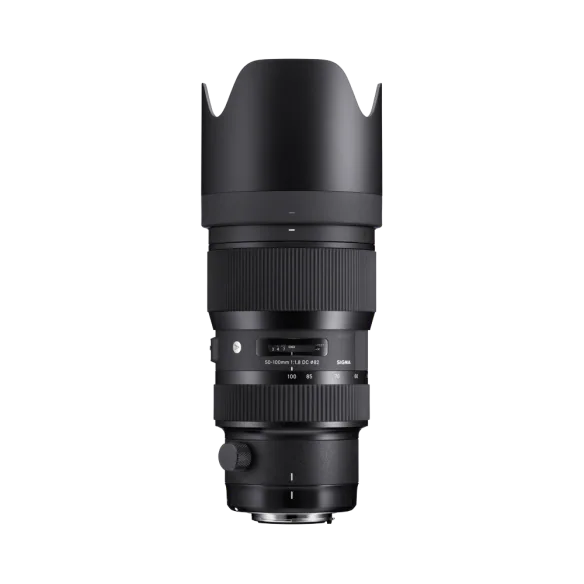
Sigma 50-100mm ƒ/1.8 DC HSM Art Photography Lens with EF-Mount

Sigma · Art Series DC HSM

$1,099.00 MSRP

Key Features

  • Telephoto APS-C Coverage
  • ƒ/1.8 Maximum Aperture
  • Autofocus
  • 1:6.7 Maximum Magnification
  • 82mm Filter Thread

🔒 Log in to add this to a kit.

In the Box

  • 1 × Case
  • 1 × Front Cap LCF-82mm III
  • 1 × Petal Type Lens Hood LH880-02
  • 1 × Rear Cap LCR II

Overview

The Sigma 50-100mm ƒ/1.8 DC HSM Art Photography Lens with EF-Mount is a telephoto 50-100mm zoom covering APS-C sensors. Telephoto focal lengths flatten perspective and lift a subject clear of its background, which portrait and sports photographers rely on. A fast ƒ/1.8 maximum aperture separates subject from background and keeps shutter speeds up as the light falls, closing to ƒ/16. Autofocus lets the camera's own subject detection drive the lens, which is what makes it usable for tracking moving subjects and for video. It mounts via EF-Mount. Closest focus is 3.1 ft, for a maximum magnification of 1:6.7.
Features

Key Features

Telephoto APS-C Coverage

The lens covers APS-C sensors. A telephoto field of view compresses distance and separates a subject from its background, the range portrait and sports photographers work in.

ƒ/1.8 Maximum Aperture

A fast ƒ/1.8 aperture separates a subject from its background and holds shutter speed up in poor light, and the lens closes to ƒ/16.

Autofocus

The lens focuses under the camera's control, so hybrid shooters can use the body's own subject detection and tracking rather than pulling focus by hand — the difference between catching a moving subject and losing it.

1:6.7 Maximum Magnification

A maximum magnification of 1:6.7 sets how large a small subject renders on the sensor, with a closest focus of 3.1 ft.

82mm Filter Thread

Optical Design

50-100mm Zoom Range

The 50-100mm range covers a scene without a lens change, which travel, event and documentary work depend on.

Mount & Build

EF-Mount

The lens mounts via EF-Mount, which sets the bodies it fits directly and those it reaches through an adapter.

Electronic Lens Communication

Contacts in the mount pass aperture, focus and focal length between lens and body, so exposure data is recorded to EXIF and in-camera corrections for distortion and vignetting apply automatically.