
Sony FX6 Full-Frame 4K Cinema Camera
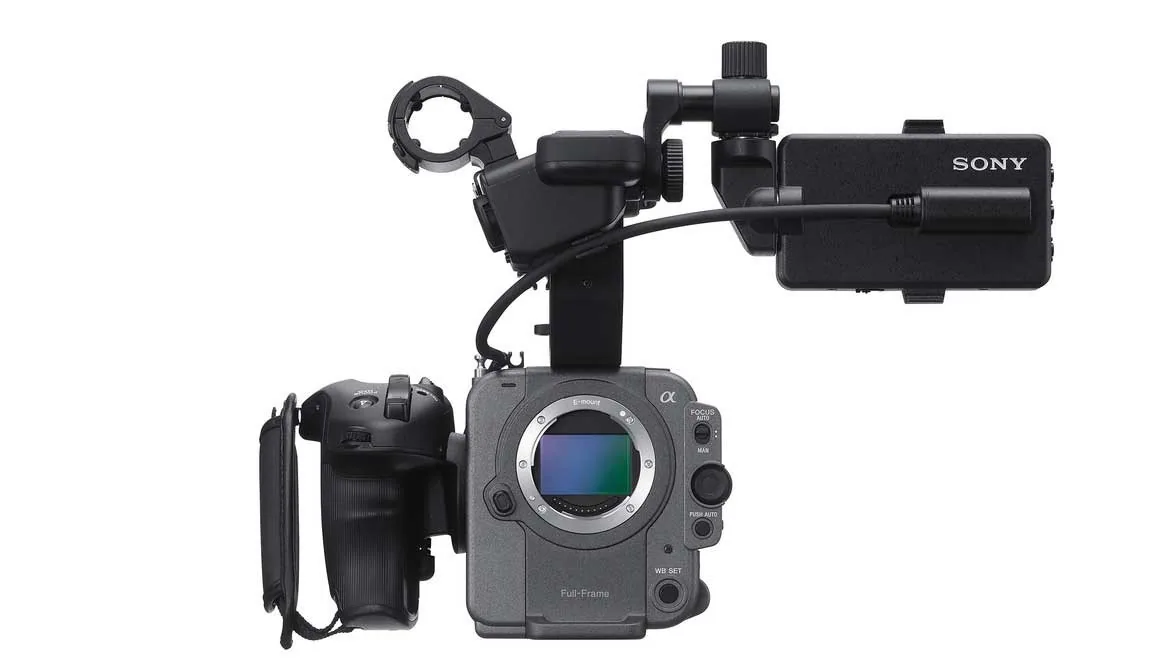
Sony · Sony FX Cinema Cameras
$5,998.00 MSRP
Key Features
- Full Frame Exmor R CMOS
- S-LOG 3
- Up to 240 fps
- E-Mount
🔒 Log in to add this to a kit.
In the Box
- 1 × Sony BP-U35 Lithium-Ion Battery Pack (Sony BP-U Series, 35 Wh)
- 1 × Sony FX6 Full-Frame Cinema Camera
- 1 × 3.5" LCD Monitor
- 1 × AC Adapter
- 1 × BC-CU1 Battery Cradle
- 1 × Grip Remote Control
- 1 × Handle Unit
- 1 × Protective Caps
D.I.T. Data Imaging Technician
Resolution
Internal Recording
External Recording
Aspect Ratio
Frame Rates
Project Frame Rates
Off-Speed Frame Rates
Sensor Modes
Sensor Modes
| Resolution | Recording Area (W × H) | Crop Factor |
|---|---|---|
| UHD 4K 3840 x 2160 | 35.6 mm × 20.03 mm | 1.06x est. |
| 4.2K 1.77:1 4240 x 2392 | 35.6 mm × 20.08 mm | 1.06x est. |
| DCI 4K 4096 x 2160 | 35.6 mm × 18.77 mm | 1.08x est. |
| 4.3K 1.77:1 4264 x 2408 | 35.6 mm × 20.11 mm | 1.06x est. |
Bit Depth & Color Sampling
10-Bit 4:2:2
10-bit 4:2:2 video captures 1,024 shades per color channel, with chroma sampled at half the horizontal resolution of luma, which helps preserve more color detail than 4:2:0. This format strikes a balance between color accuracy and file size, making it ideal for professional broadcast, recording, and moderate color grading work where efficiency and quality are both important.
12-Bit RAW (Logarithmic)
12-bit Log recording captures over 68 billion colors while using a logarithmic gamma curve to preserve more dynamic range and highlight/shadow detail in a visually compressed form. This combination provides maximum flexibility in post-production, especially for color grading and matching footage across different lighting conditions.
8-Bit 4:2:0
8-bit 4:2:0 video stores 256 shades per color channel and reduces color resolution by sampling color information (chroma) at one-quarter the rate of brightness (luma). This format is efficient for compression and streaming but offers limited flexibility for color correction and grading compared to higher bit-depth and chroma subsampling formats.
Codecs
Blackmagic RAWExternal recorder
Blackmagic RAW (BRAW) is a proprietary video codec developed by Blackmagic Design, primarily used for high-quality video recording with reduced file sizes. It was designed to balance the need for high-quality, flexible post-production workflows while keeping file sizes manageable, making it suitable for both high-end professional work and more accessible, streamlined projects.
ProRes RAWExternal recorder
ProRes RAW is a professional video codec developed by Apple that combines the flexibility of raw image data with the performance of ProRes compression. It captures high-quality, unprocessed image data from a camera sensor, providing filmmakers with greater control over exposure, white balance, and color grading in post-production. ProRes RAW is especially popular in workflows that require high-quality raw footage but need a more efficient and editable format for real-time editing in Final Cut Pro, Adobe Premiere Pro, and other compatible software.
XAVC
XAVC-4K is an optimized version of XAVC designed specifically for 4K resolution recording. It offers high-quality video capture with high bitrates suitable for cinematic and professional workflows. XAVC-4K supports both Intra-frame and Long GOP compression methods, depending on the camera or specific production requirements. It is ideal for productions that require 4K quality, such as films, high-end broadcasts, and premium content creation. This codec ensures excellent image quality while providing the flexibility of working with large 4K files in post-production.
Compression
3:1
3:1 compression means the original data size is reduced to one-third through compression, striking a middle ground between maintaining image quality and saving storage space. In video terms, this ratio suggests that for every 3 units of uncompressed footage, only 1 unit remains after compression. It’s commonly seen in professional workflows where preserving detail is critical while still managing file sizes for storage and post-production efficiency. Compared to higher compression ratios (like 5:1 or 8:1), 3:1 typically delivers better image fidelity, making it suitable for high-end productions where visual quality is a priority.
5:1
5:1 compression refers to a data reduction ratio where the original file size is compressed to one-fifth of its original size. In video production, this means that for every 5 units of uncompressed data, only 1 unit remains after compression, significantly reducing storage and bandwidth requirements. This level of compression can be achieved through various codecs, and aims to strike a balance between image quality and efficiency. While 5:1 compression retains much of the original image detail, it's still a lossy process—meaning some data is permanently discarded—which can affect image quality.
8:1
8:1 compression refers to a data reduction ratio where the original file size is compressed to one-eigth of its original size. In video production, this means that for every 8 units of uncompressed data, only 1 unit remains after compression, significantly reducing storage and bandwidth requirements. This level of compression can be achieved through various codecs, and aims to strike a balance between image quality and efficiency. While 8:1 compression retains much of the original image detail, it's still a lossy process—meaning some data is permanently discarded—which can affect image quality.
All-Intra
All-Intra (All-I) compression records each frame as a complete image, meaning every frame is independently encoded without relying on data from other frames. This results in higher quality and more predictable editing performance, making it ideal for post-production workflows that require precise frame-by-frame manipulation.
All-Intra VBR
All-Intra (All-I) compression records each frame as a complete image, meaning every frame is independently encoded without relying on data from other frames. This results in higher quality and more predictable editing performance, making it ideal for post-production workflows that require precise frame-by-frame manipulation.
Long-GOP
Long-GOP (Long Group of Pictures) is a video compression technique that reduces file size by storing only the changes between frames rather than every individual frame. It uses a combination of I-frames (intraframes with full image data), P-frames (predicted frames), and B-frames (bidirectional frames) to efficiently compress video over a sequence of frames. This structure allows for significantly smaller file sizes compared to All-Intra (All-I) compression, which encodes every frame independently. However, Long-GOP can be more processor-intensive to edit, since reconstructing any given frame may require decoding multiple surrounding frames.
ProRes RAW HQ
ProRes RAW HQ is a high-quality version of ProRes RAW, offering less compression and higher bitrates for even better image fidelity and dynamic range preservation. It is ideal for professional workflows that require maximum flexibility in color grading and post-production, while still benefiting from the efficiency of a compressed raw format.
ProRes RAW Standard
ProRes RAW is a high-efficiency codec that captures and compresses raw sensor data from cameras, offering flexibility in post-production with lower file sizes compared to uncompressed raw formats. It preserves the dynamic range and color information of raw footage while allowing for more manageable storage and faster workflows.